
SCIENTIFIC CATALOG
Recombinant Protein
Browse relevant products, services, and consultable specifications.
74 items

Recombinant Kex2 Protease
This recombinant Kex2 product is produced via expression in Pichia pastoris and carries a His-tag. It exhibits efficient catalytic activity at pH 7.0–9.0 (optimal at 37 °C), retains high stability under mildly acidic conditions (pH 5.0–6.0), and is well-suited for manufacturing recombinant GLP-1 receptor agonist therapeutics and other polypeptide products.
View Details
Recombinant Carboxypeptidase B
This recombinant carboxypeptidase B product is produced via microbial fermentation and heterologous expression in either Escherichia coli or Pichia pastoris, supplied without a His-tag fusion, and exhibits optimal catalytic activity at pH 7.5–9.0. It is ideally suited for manufacturing recombinant insulin and its analogs, GLP-1 receptor agonist therapeutics, and a broad range of other recombinant polypeptide products.
View Details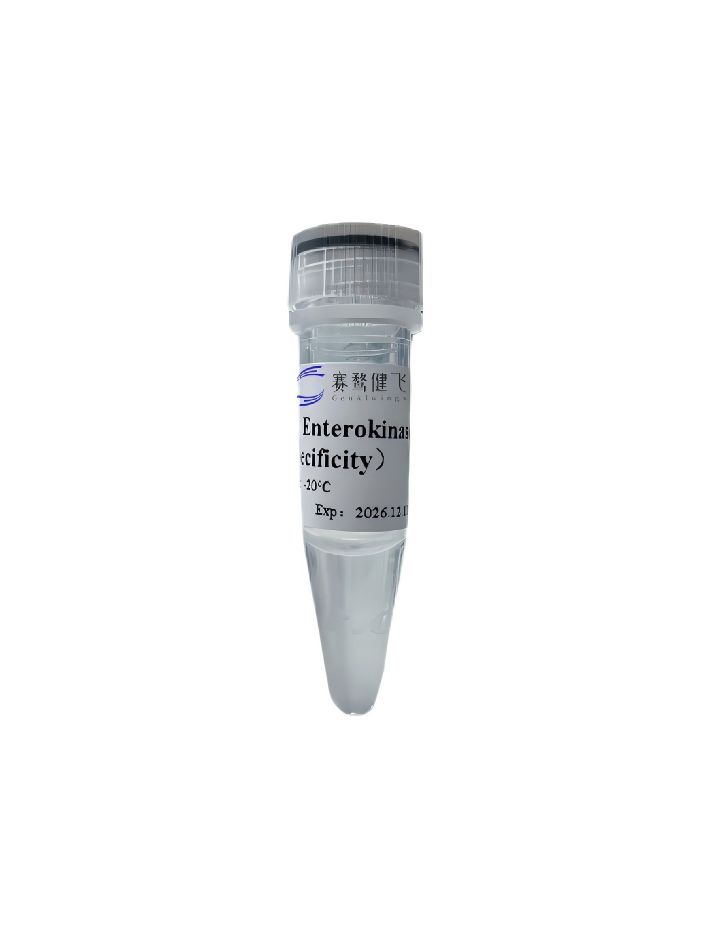
Recombinant Enterokinase
This product is a highly purified recombinant preparation of the bovine enterokinase light chain with strict target sequence specificity, free of contaminating non-specific protease activities, and maintains efficient cleavage performance across a pH range of 4.5–9.5 and temperature range of 4–45 °C.
View Details
phi29 DNA Polymerase
Phi29 DNA polymerase is a thermophilic DNA polymerase cloned from the B. subtilis phage phi29. It has high processivity and strand displacement activity, allowing it to continuously synthesize DNA fragments up to 70kb, making it great for efficient isothermal DNA amplification with high fidelity. There are two types of phi29 DNA polymerase available—one heat-resistant and one highly active—both of which can be used for nucleic acid and gene testing.
View Details
Thermostable T7 RNA Polymerase
This product is a genetically engineered DNA-dependent RNA polymerase that is highly specific to the T7 phage promoter. Compared to wild-type T7 RNA polymerase, it can efficiently transcribe in vitro at temperatures between 37 and 54°C.
View Details
Trypsin
Trypsin catalyzes the hydrolysis of peptide bonds at the carboxyl side of lysine or arginine residues in proteins, resulting in smaller peptide fragments. Trypsin can be used for protein digestion, cell passaging, and proteomic analysis.
View Details
Creatinase
Creatine kinase (CRE) can further catalyze the hydrolysis of creatine to produce creatinine and urea. CNH, CRE, and SOX together can be used to measure creatinine levels in biological samples like serum and urine, as well as for clinical biochemical tests related to kidney function.
View Details
Glycerol Kinase
Glycerol kinase can catalyze the phosphorylation of glycerol to produce glycerol-3-phosphate in the presence of ATP, accompanied by the conversion of ATP to ADP. Glycerol kinase can be used for measuring glycerol content, enzyme-coupled reactions for triglyceride detection, studies of lipid metabolism, and clinical biochemical analysis.
View Details
EGFR Protein, Human (Biotinylated, 621a.a, HEK293, Fc-Avi)
Recombinant human EGFR protein (biotinylated, 621 a.a.), expressed in HEK293 cells, with C-terminal Avi tag and C-terminal hFc tag, purity >95%.
View Details
Creatinine amidohydrolase
Creatinine enzyme (CNH) can catalyze the hydrolysis of creatinine into creatine. CNH, CRE, and SOX together can be used to measure creatinine levels in biological samples like serum and urine, as well as for clinical biochemical tests related to kidney function.
View Details
Proteinase K
Proteinase K catalyzes the hydrolysis of peptide bonds in various proteins, subsequently forming small peptide fragments or amino acids. Proteinase K can be used for nucleic acid extraction, protein removal, and sample lysis.
View Details
Glucose-6-Phosphate Dehydrogenase
Glucose-6-phosphate dehydrogenase can catalyze the oxidation of glucose-6-phosphate to 6-phosphoglucono-δ-lactone in the presence of NADP⁺, with NADP⁺ being reduced to NADPH at the same time. Glucose-6-phosphate dehydrogenase can be used for screening G6PD deficiency, assessing the risk of hemolytic anemia, testing red blood cell enzyme activity, and conducting clinical biochemical analysis.
View Details